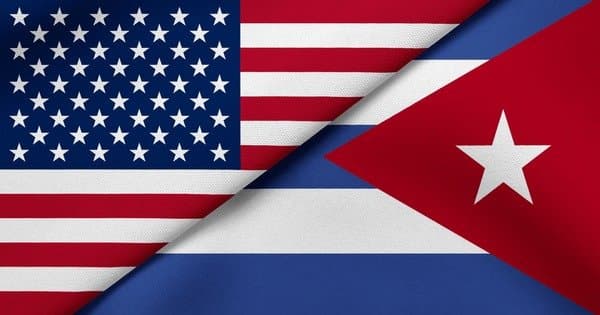
US x Cuba economic deal by...?
The conditions, incentives and evidence that could shape the answer.The question behind the headline
A mutually accepted deal is the central evidence. A unilateral sanctions change can matter economically while still leaving the two-government agreement condition unmet.
At the October 4, 2026 market snapshot, December 31 carried a 10.5% Yes price. [1]
The condition that changes the answer
An officially announced U.S.–Cuba agreement on trade, tariffs, sanctions or the embargo qualifies; it need not take effect yet. Both parties must announce it, or overwhelming credible reporting must confirm a finalized agreement. [1]
Each child closes at its stated date, 11:59 p.m. ET; the leading child is December 31, 2026. [1]
Evidence for and against the leading outcome
Matching official acceptance of the same finalized trade-related agreement supports Yes.
Ongoing talks, unilateral policy changes or incompatible descriptions of the terms can fall short.
The next useful checks are statements from both governments; finalized terms and covered trade topic; announcement date versus effective date. The linked primary references make the process and named data source inspectable. [2][3]
A closer look at the market
These child contracts can overlap: different dates, thresholds or people do not necessarily describe mutually exclusive alternatives. Their Yes prices should not be added into a single winner probability, and the highest Yes price is not automatically the most informative question.
The event had approximately $442,154 in total traded volume at observation. That is a record of turnover across this event, not a count of distinct people, a search-volume estimate or proof that every child contract is easy to trade. The analytical quote is fixed to the timestamp shown here; later live prices can differ. [1]
The useful conclusion is conditional: check the exact milestone before interpreting the price as a view on the larger story.
WEIGH BOTH SIDES
What would change the outlook?
December 31 — Yes
Quoted market evidence: Oct 4, 2026, 09:57 UTC. The live market panel may show a newer observation.
Matching official acceptance of the same finalized trade-related agreement supports Yes.
Ongoing talks, unilateral policy changes or incompatible descriptions of the terms can fall short.
The next signals to watch
- Statements from both governments
- Finalized terms and covered trade topic
- Announcement date versus effective date
The analysis starts from 10.5% for the Yes side of “December 31”. A view merely agreeing that this is plausible does not show that the price understates it. The probability, rule and remaining time all have to be compared. [1]
The useful conclusion is conditional: check the exact milestone before interpreting the price as a view on the larger story.
A FEW GOOD QUESTIONS
What else should you know?
What exactly would settle this market?
An officially announced U.S.–Cuba agreement on trade, tariffs, sanctions or the embargo qualifies; it need not take effect yet. Both parties must announce it, or overwhelming credible reporting must confirm a finalized agreement. [1]
What is the deadline, and can settlement come later?
Each child closes at its stated date, 11:59 p.m. ET; the leading child is December 31, 2026. [1]
Does the quoted probability show an advantage?
No. 10.5% is the observed Yes price for “December 31”, not a verified probability from independent research. A useful assessment needs evidence that changes the expected chance under the exact rules, plus the actual price available at the time. [1]
CHECK THE EVIDENCE
Sources & further reading
- Polymarket — event, child contracts and resolution rules ↗polymarket.com
- ofac.treasury.gov — official source ↗ofac.treasury.gov
- state.gov — official source ↗state.gov
Published . AI-assisted, source-linked analysis. We distinguish evidence from interpretation; this article does not establish a trading edge. How we work →