Iran charges Hormuz fees by...?
The conditions, incentives and evidence that could shape the answer.What this event actually asks
The useful question is precise: Iran charges Hormuz fees by October 31? In the API observation at 09:57 UTC on 2026-10-04, the selected contract’s first listed outcome was priced at 7%. The parent event had recorded $3,486,840 in cumulative volume. This is turnover across the event, not a count of independent forecasters or proof that this outcome is correctly priced. [1][2]
The Yes condition is that the Iranian government officially announces and begins collecting fees, tolls, charges, tariffs, or similar payments from commercial vessels which are mandatory for passage through or access to the Strait of Hormuz during the interval from market creation to the specified date, 11:59 PM ET. Otherwise, this market resolves to “No.” [2]
A shipping route can be legally open and commercially unusable
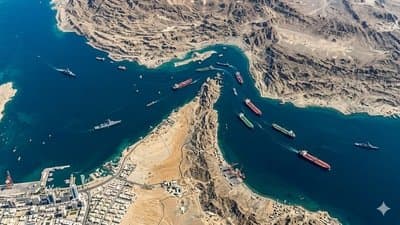
The IMO has called for restored freedom of navigation in the Strait of Hormuz while highlighting risks to seafarers and supply chains. Its statement separates the right of transit from whether ships and crews can safely exercise it. [3]
For operators, a route’s usability depends on physical security, insurance, port access and dependable passage. A government announcement can change expectations immediately, but commercial traffic may recover more slowly. Conversely, some ships may transit despite continuing political disagreement. Measure the variable the contract actually names.
Which evidence would change the assessment?
Sustained vessel movements or a formally adopted measure that meets the stated test would strengthen the positive case. For traffic thresholds, the correct vessel classes and observation window matter.
One successful transit, a temporary military escort or a promise to reopen may not establish normal traffic. Data gaps and vessels changing identification practices can also complicate apparent counts.
Check whether a new report changes the evidence for the specified condition or merely repeats an existing claim. A price move can identify a question worth investigating without establishing its cause.
The next useful checkpoint
Written-rule date: October 31; 11:59 PM (ET). The selected contract and any reporting grace period govern settlement. [2]
Our reading is conditional: compare the next primary record with the exact threshold above, then revisit the case if the evidence contradicts it. A high quoted chance does not establish certainty; a low quote does not make the event impossible. The value of the article is a clearer test of the claim, not an asserted trading advantage.
WEIGH BOTH SIDES
What would change the outlook?
Iran charges Hormuz fees by October 31?
Quoted market evidence: Oct 4, 2026, 09:57 UTC. The live market panel may show a newer observation.
Sustained vessel movements or a formally adopted measure that meets the stated test would strengthen the positive case. For traffic thresholds, the correct vessel classes and observation window matter.
One successful transit, a temporary military escort or a promise to reopen may not establish normal traffic. Data gaps and vessels changing identification practices can also complicate apparent counts.
The next signals to watch
- The contract’s designated traffic series or the text of the relevant formal agreement.
- Vessel categories, daily coverage and whether counts refer to entries, exits or complete transits.
- Evidence that a change is sustained rather than an isolated passage or announcement.
The selected contract’s first outcome was 7% at 09:57 UTC on 2026-10-04. That price is the observation being analyzed, not an independent estimate of fair value. The separately timestamped live panel may differ. [2]
Form a view by checking the specified event against the evidence above. Publicly available context can explain a price without proving that it is wrong; this article does not establish a positive trading edge.
A FEW GOOD QUESTIONS
What else should you know?
What exactly does this Polymarket event measure?
The Yes condition is that the Iranian government officially announces and begins collecting fees, tolls, charges, tariffs, or similar payments from commercial vessels which are mandatory for passage through or access to the Strait of Hormuz during the interval from market creation to the specified date, 11:59 PM ET. Otherwise, this market resolves to “No.” [2]
What evidence matters most for this outcome?
Sustained vessel movements or a formally adopted measure that meets the stated test would strengthen the positive case. For traffic thresholds, the correct vessel classes and observation window matter. The full contract defines which sources and exceptions govern settlement. [2]
CHECK THE EVIDENCE
Sources & further reading
- Polymarket: Iran charges Hormuz fees by...? — event and aggregate volume ↗polymarket.com
- Polymarket: Iran charges Hormuz fees by October 31? — selected contract and full resolution rules ↗polymarket.com
- IMO: Uncertainty for seafarers in the Strait of Hormuz ↗imo.org
Published . AI-assisted, source-linked analysis. We distinguish evidence from interpretation; this article does not establish a trading edge. How we work →