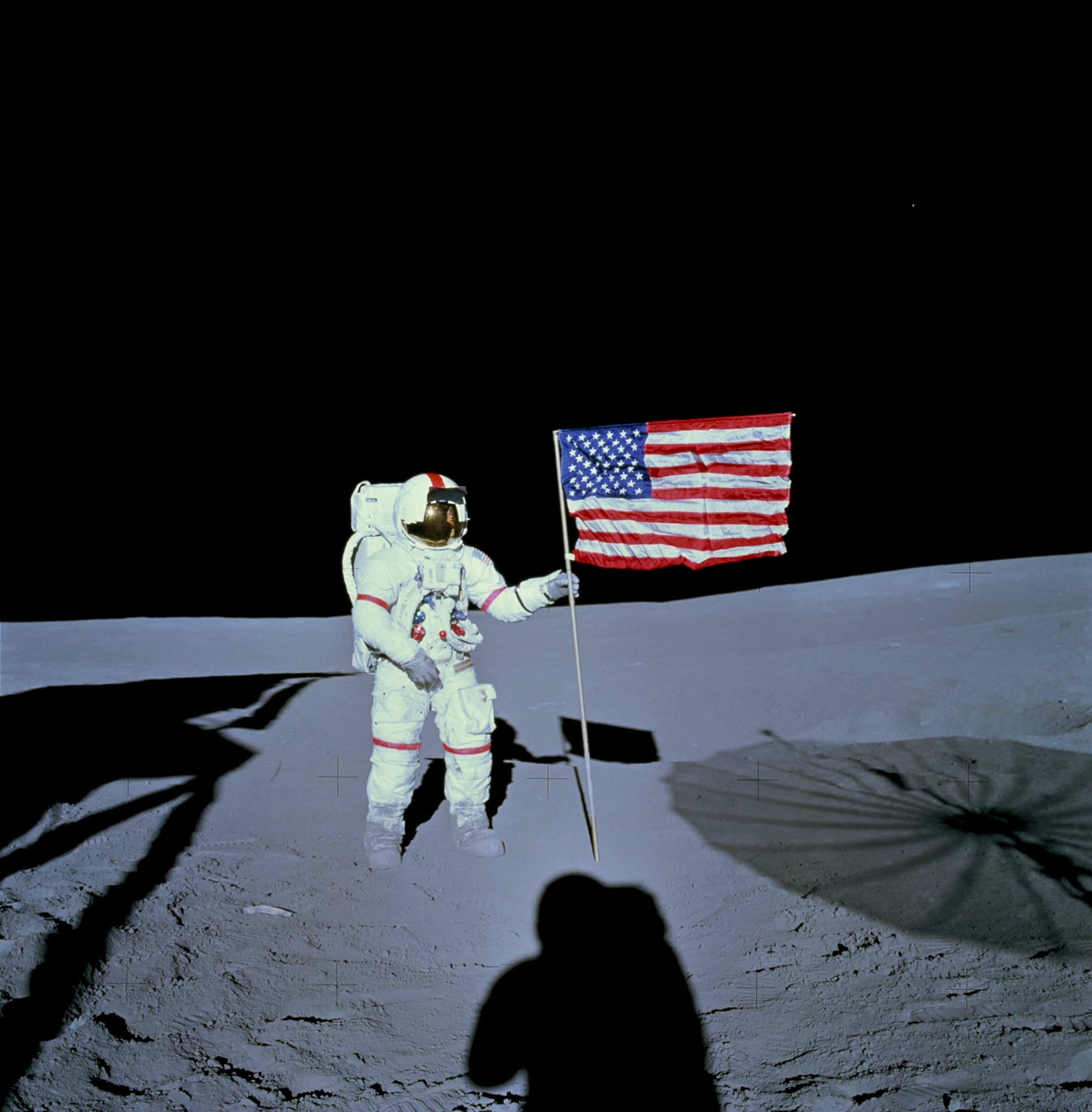
Human moon landing in 2026?
The conditions, incentives and evidence that could shape the answer.Human moon landing in 2026: the question behind the price
A crewed lunar landing is a more demanding milestone than a launch, a lunar flyby or an uncrewed touchdown. Those achievements should not be conflated. In the snapshot checked October 4, 2026 at 09:57 UTC, the focus outcome, Human moon landing in 2026?, was quoted at 1.3%. [1]
Artemis comprises multiple missions. [3] Our interpretation is that each additional requirement creates another potential failure point. A successful preliminary test can support confidence without completing a later milestone. Conversely, a flight may satisfy a narrowly defined contract even if something goes wrong after the required event has occurred.
A launch, an altitude and a landing differ
Requires a spacecraft with humans aboard to touch down on the Moon by December 31, 2026 at 11:59 p.m. ET. Later technical complications do not undo that touchdown; credible reporting establishes the event. [2]
The practical implication for Human moon landing in 2026? is to distinguish necessary conditions from supporting clues. A plausible explanation can help identify what to investigate, but the outcome still turns on evidence satisfying the specified test. Describe the completed milestone precisely; do not collapse a sequence of difficult achievements into a single success label.
What the other prices and the trading record reveal
The complementary No quote is 98.7%. That makes the focus event a low-priced possibility in this snapshot, rather than an impossibility. The useful test is whether new evidence satisfies a missing condition; simply describing a conceivable route to Yes does not show that the price is wrong. [1]
This event recorded $1.97 million in cumulative turnover across its life. The captured record contains 1 eligible open constituent contract. Those are the scope of this snapshot, not a count of independent forecasters. [1]
The next evidence that would change the assessment
For this event, watch official mission announcements and flight records; the exact vehicle, altitude, landing or reuse requirement; which subsequent anomalies or schedule changes affect the written test. [2]
The next meaningful update is evidence about the required milestone or measurement. A changed quote by itself does not identify what happened or why. Official mission evidence meeting the defined physical or announcement milestone would strengthen the case. A delay, a different mission type or a test that stops short of the required milestone could leave the condition unmet.
WEIGH BOTH SIDES
What would change the outlook?
Human moon landing in 2026?
Quoted market evidence: Oct 4, 2026, 09:57 UTC. The live market panel may show a newer observation.
Official mission evidence meeting the defined physical or announcement milestone would strengthen the case. [2]
A delay, a different mission type or a test that stops short of the required milestone could leave the condition unmet. [2]
The next signals to watch
The observed 1.3% quote is the captured market expectation for Human moon landing in 2026?. Publicly known conditions alone do not establish that this price is too high or too low. [1]
Describe the completed milestone precisely; do not collapse a sequence of difficult achievements into a single success label.
A FEW GOOD QUESTIONS
What else should you know?
Human moon landing in 2026?
The selected condition, Human moon landing in 2026?, was priced at 1.3% when checked October 4, 2026 at 09:57 UTC. A crewed lunar landing is a more demanding milestone than a launch, a lunar flyby or an uncrewed touchdown. Those achievements should not be conflated. [1]
What evidence would be decisive for this particular outcome?
The key observations are official mission announcements and flight records; the exact vehicle, altitude, landing or reuse requirement; which subsequent anomalies or schedule changes affect the written test. The full linked contract governs exceptions. [2]
Does this market price prove the event will happen?
No. 1.3% describes the quoted focus condition in a dated snapshot. It is not a verified forecast, an official result or evidence that all participants independently evaluated the same information. [1]
CHECK THE EVIDENCE
Sources & further reading
- Polymarket: Human moon landing in 2026? — observed event and constituent prices ↗polymarket.com
- Polymarket: Human moon landing in 2026? — exact resolution rules ↗polymarket.com
- NASA: Artemis ↗nasa.gov
Published . AI-assisted, source-linked analysis. We distinguish evidence from interpretation; this article does not establish a trading edge. How we work →