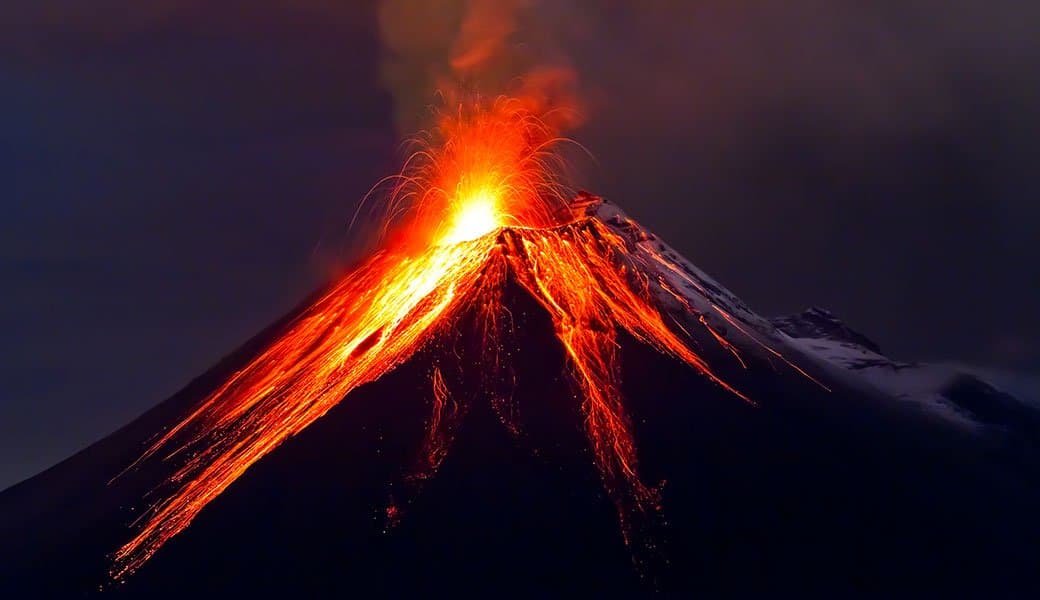
How many large volcano eruptions (VEI ≥4) in 2026?
The conditions, incentives and evidence that could shape the answer.What this event actually asks
The useful question is precise: Will there be exactly 0 confirmed VEI 4 or higher volcanic eruptions worldwide in 2026? In the API observation at 09:57 UTC on 2026-10-04, the selected contract’s first listed outcome was priced at 36%. The parent event had recorded $1,165,463 in cumulative volume. This is turnover across the event, not a count of independent forecasters or proof that this outcome is correctly priced. [1][2]
This market will resolve according to the number of natural volcanic eruptions with a Volcanic Explosivity Index (VEI) of 4 or higher between January 1 and December 31, 2026, 11:59 PM ET. [2]
Eruption size and eruption counts need a consistent definition
The Smithsonian Global Volcanism Program’s annual eruption tables assign the maximum Volcanic Explosivity Index for an eruption to the year in which that eruption began. That makes the date convention important when a long eruption spans more than one calendar year. [3]
A dramatic plume does not by itself establish the VEI threshold. Separate a newly starting eruption from continuing activity, and distinguish a provisional estimate from the designated source’s record. A change in how an eruption is classified can matter to a count without representing a new eruption.
Which evidence would change the assessment?
A qualifying eruption in the designated record, with the required VEI and year treatment, would strengthen the positive outcome.
Continuing activity from an earlier eruption or a lower VEI may not qualify. Reports describing destruction are not a substitute for the specified scientific index.
Check whether a new report changes the evidence for the specified condition or merely repeats an existing claim. A price move can identify a question worth investigating without establishing its cause.
The next useful checkpoint
Written-rule dates: January 1, December 31, 2026; 11:59 PM (ET). The selected contract and any reporting grace period govern settlement. [2]
Our reading is conditional: compare the next primary record with the exact threshold above, then revisit the case if the evidence contradicts it. A high quoted chance does not establish certainty; a low quote does not make the event impossible. The value of the article is a clearer test of the claim, not an asserted trading advantage.
WEIGH BOTH SIDES
What would change the outlook?
Will there be exactly 0 confirmed VEI 4 or higher volcanic eruptions worldwide in 2026?
Quoted market evidence: Oct 4, 2026, 09:57 UTC. The live market panel may show a newer observation.
A qualifying eruption in the designated record, with the required VEI and year treatment, would strengthen the positive outcome.
Continuing activity from an earlier eruption or a lower VEI may not qualify. Reports describing destruction are not a substitute for the specified scientific index.
The next signals to watch
- The Smithsonian eruption record and its start date.
- The assigned maximum VEI and any scientific revision.
- Whether the rule counts eruptions beginning in the year or qualifying activity during it.
The selected contract’s first outcome was 36% at 09:57 UTC on 2026-10-04. That price is the observation being analyzed, not an independent estimate of fair value. The separately timestamped live panel may differ. [2]
Form a view by checking the specified event against the evidence above. Publicly available context can explain a price without proving that it is wrong; this article does not establish a positive trading edge.
A FEW GOOD QUESTIONS
What else should you know?
What exactly does this Polymarket event measure?
This market will resolve according to the number of natural volcanic eruptions with a Volcanic Explosivity Index (VEI) of 4 or higher between January 1 and December 31, 2026, 11:59 PM ET. [2]
What evidence matters most for this outcome?
A qualifying eruption in the designated record, with the required VEI and year treatment, would strengthen the positive outcome. The full contract defines which sources and exceptions govern settlement. [2]
CHECK THE EVIDENCE
Sources & further reading
- Polymarket: How many large volcano eruptions (VEI ≥4) in 2026? — event and aggregate volume ↗polymarket.com
- Polymarket: Will there be exactly 0 confirmed VEI 4 or higher volcanic eruptions worldwide in 2026? — selected contract and full resolution rules ↗polymarket.com
- Smithsonian Global Volcanism Program: Eruptions by year ↗volcano.si.edu
Published . AI-assisted, source-linked analysis. We distinguish evidence from interpretation; this article does not establish a trading edge. How we work →